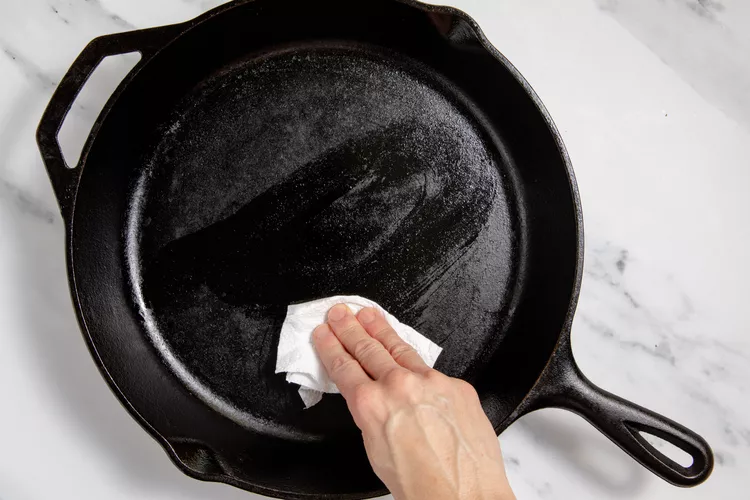
Seasoning is a crucial part of the experience and relationship with your cast iron skillet. If not done properly or at all, your skillet suffers—and you will too. We sought the experts to help clarify the process and explain why seasoning your cast iron skillet is so important. Find out all you need to know below.
What Does ‘Seasoning’ Mean?
Seasoning happens in two ways. The first is through regular usage of your cast iron cookware. Over time, the cooking of food in fat creates a thin, black layer (through a process called oxidation) that becomes “a natural, easy-release cooking surface and helps prevent cast iron cookware from rusting,” says Lodge Cast Iron.
At some point, you may notice that your food is sticking more to your skillet, or that the that seasoned non-stick layer has worn off. When that happens, you can employ the second method for seasoning your skillet. It’s a process that mimics what happens when you cook, but without the food. For this version, described in detail below, all you need is your skillet, some oil, and your oven.
How to Season a Cast Iron Pan
What You’ll Need:
A cast-iron skillet
Water
Soap
Vegetable oil, canola oil, or melted shortening (such as Crisco)
Steel wool (not always needed)
Scrub brush
