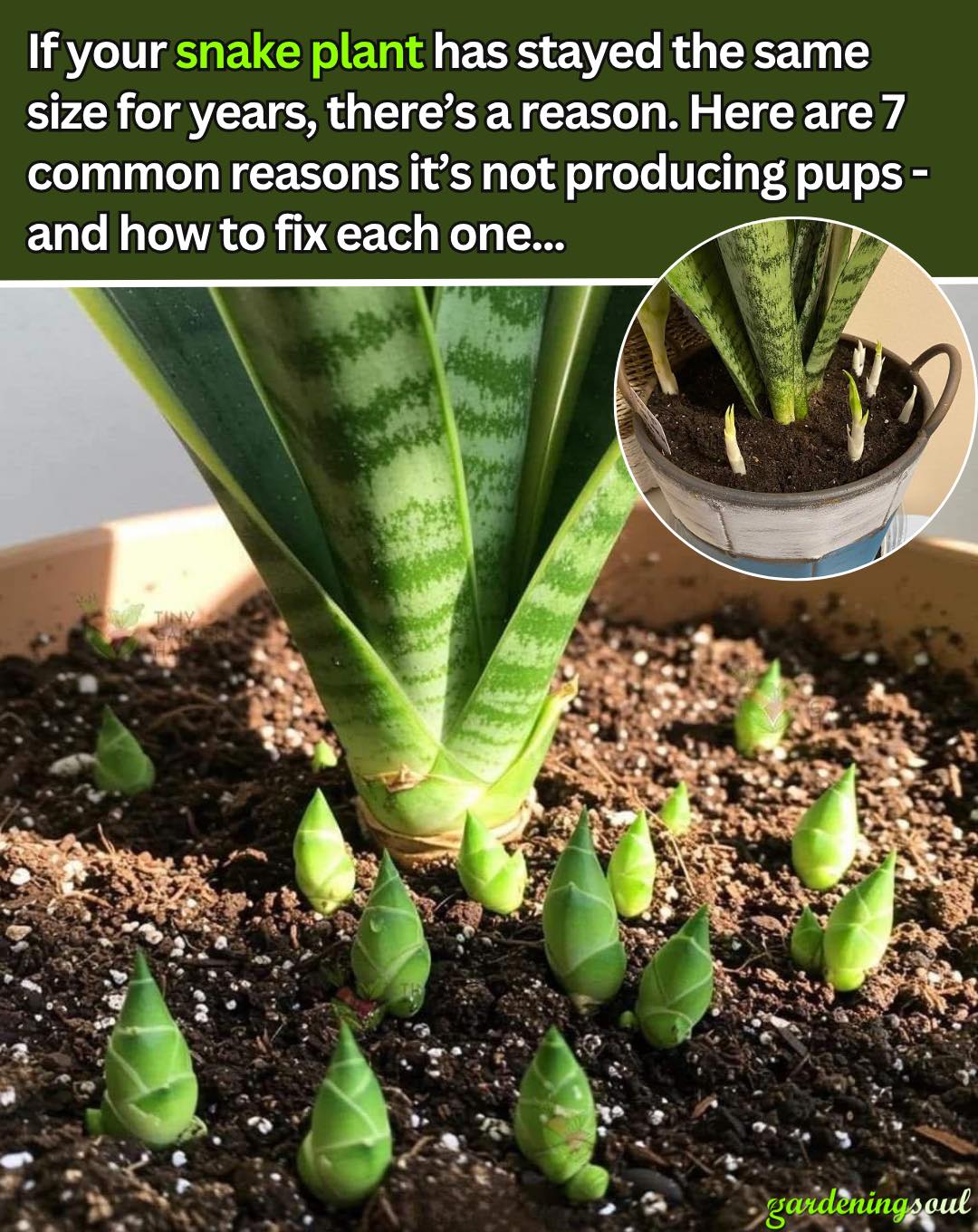
The snake plant (Sansevieria, now Dracaena trifasciata), also known as mother-in-law’s tongue, is one of the easiest houseplants to grow – it’s practically indestructible.
Yet one of the most common frustrations gardeners face is that their snake plant refuses to produce pups, those little baby shoots that emerge from the soil and eventually become new plants.
Understanding How Snake Plants Reproduce
Before diving into the problems, it’s important to understand how snake plants produce pups in the first place.
Snake plants grow from a network of rhizomes – underground stems that spread horizontally beneath the soil.
These rhizomes store nutrients and, when conditions are right, send up new shoots (pups) from the base of the plant. Over time, a single plant can develop a dense cluster of leaves and expand to fill the pot.
This means two things are essential for pup production:
- The plant must have enough energy and resources to create new growth.
- The growing conditions must signal to the plant that it’s safe to expand.
When either of these factors is missing, the plant focuses solely on survival – and pups never appear.
1. Your Snake Plant Isn’t Getting Enough Light
Why Light Matters
One of the most common reasons snake plants fail to produce pups is insufficient light. While they are known for tolerating low light, “tolerating” doesn’t mean “thriving.”
In dim conditions, a snake plant goes into energy-saving mode, focusing on maintaining existing leaves rather than producing new ones.
Photosynthesis – the process by which plants create energy – is directly tied to light levels. Without enough light, the plant can’t store the extra energy needed to push out new rhizomes and pups.
