- Leaves grow tall, thin, or floppy.
- New growth is pale or nonexistent.
- Growth slows dramatically or stops.
How I Fix It
- Move the plant to a brighter location. A few hours of indirect sunlight near an east- or west-facing window is ideal.
- Supplement with grow lights if natural light is limited, especially in winter. Aim for 10–12 hours of light daily.
- Rotate the pot every few weeks to ensure all sides receive even light.
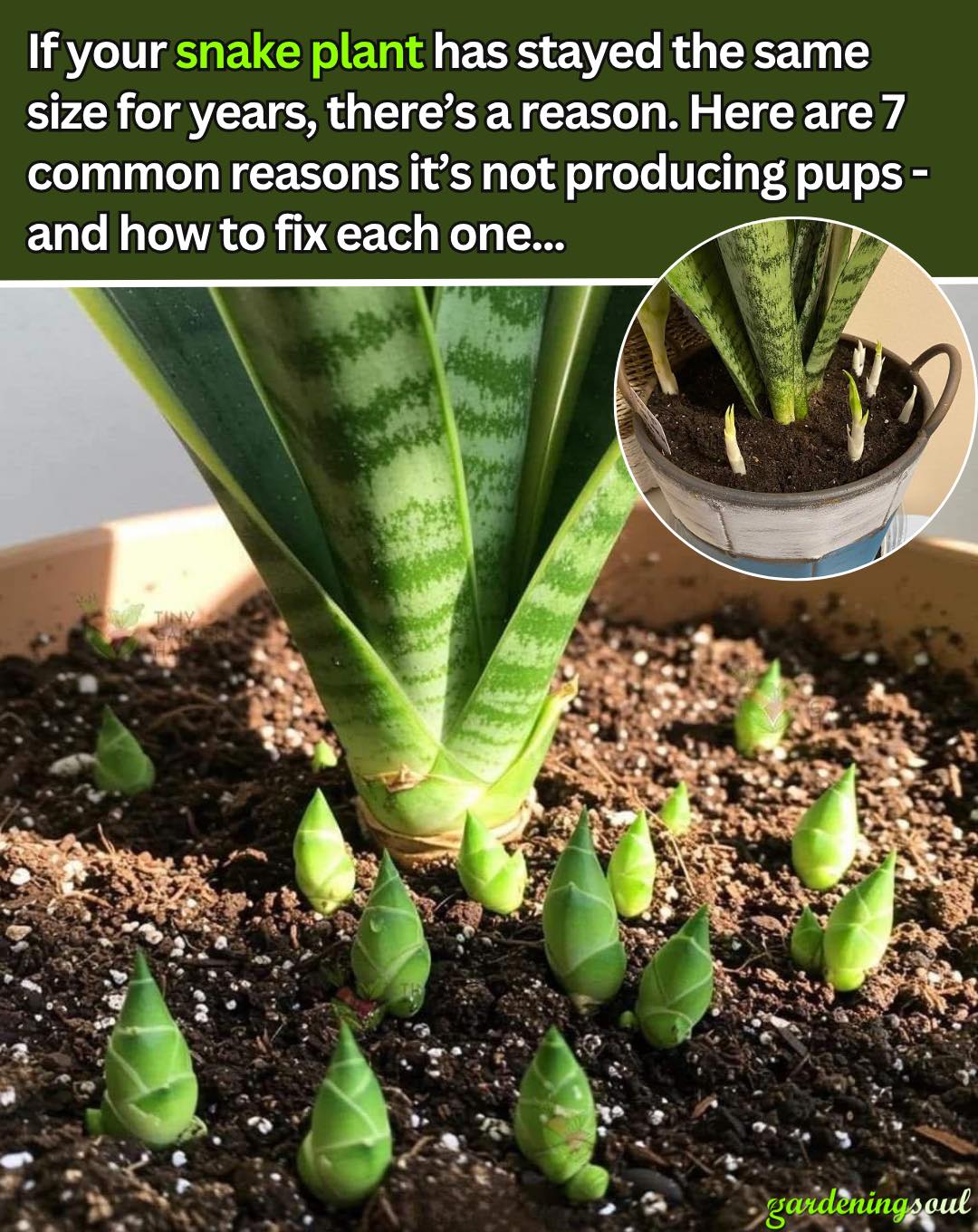
With increased light, many snake plants begin producing pups within 8–12 weeks.
2. The Pot Is Too Large (or Too Small)
Why Pot Size Matters
Snake plants are one of the few houseplants that thrive on being slightly root-bound. When there’s too much empty soil around the roots, the plant focuses on root expansion instead of producing pups.
Conversely, if the pot is too cramped, the rhizomes can’t physically spread to create new shoots.
Signs of Incorrect Pot Size
- In a large pot: slow or no new growth, soil stays wet for too long.
- In a small pot: roots circling the container, soil drying out rapidly, stunted growth.
How I Fix It
- Choose a pot that’s only 2–3 inches wider than the current root ball. This gives the rhizomes just enough room to spread without overwhelming them.
- If your plant is root-bound, divide and repot it into multiple smaller containers. This often stimulates each section to produce new pups.
- Always use a well-draining potting mix – a blend of cactus soil and perlite is perfect.
