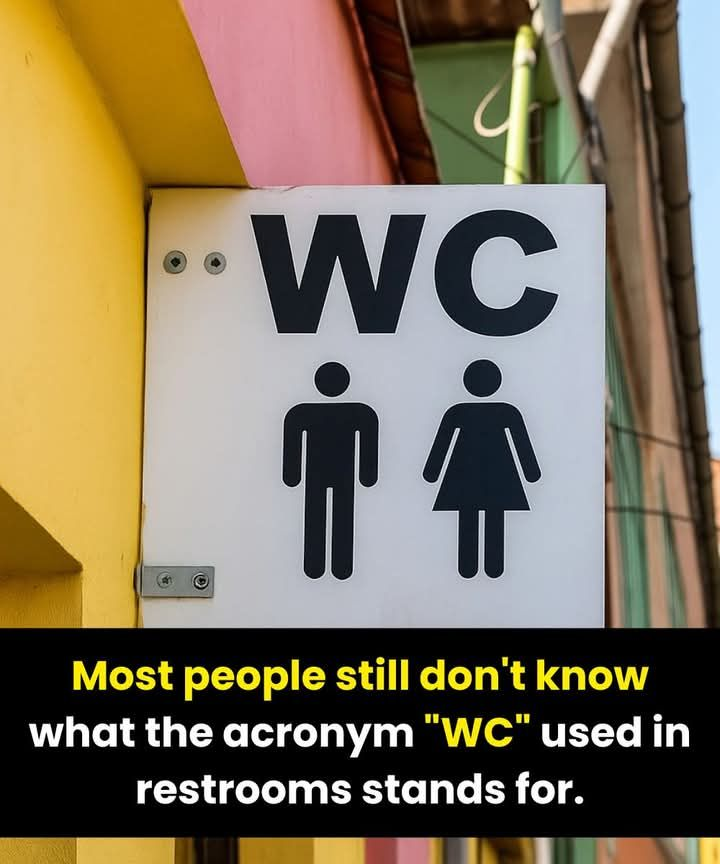
If you’ve ever stared at a door labeled WC and wondered what it stands for — you’re definitely not alone. From European hotels to old train stations, this mysterious abbreviation appears in unexpected places, often confusing travelers who are more used to signs like “Restroom,” “Toilet,” or “Bathroom.”
But don’t worry — the truth behind WC is actually much simpler than you might think.
Let’s uncover what WC means, where it came from, and why it’s still in use around the world today.
What Does WC Stand For?
WC stands for Water Closet.
That’s right — it’s not a secret code or fancy foreign phrase. A “water closet” is an older term for a room that contains a flush toilet — as opposed to an outhouse or a chamber pot, which were common before indoor plumbing.
A Brief History of the Water Closet
The term “Water Closet” originated in Victorian England during the 19th century when indoor plumbing was a new and luxurious concept. Back then, a water closet was a private room — often off a bedroom or hallway — that contained a toilet with a flushing mechanism.
At the time, many homes still relied on outdoor privies (outhouses). Having a water-powered flushing toilet indoors was a major upgrade and symbol of modern living.
As the technology spread across Europe, the abbreviation WC became a common way to label public and private toilet facilities.
Why Is WC Still Used?
You might be wondering — why do we still see WC today, especially when terms like “Restroom” and “Bathroom” are so widespread?
Here’s why WC has stuck around:
✅ International Recognition
