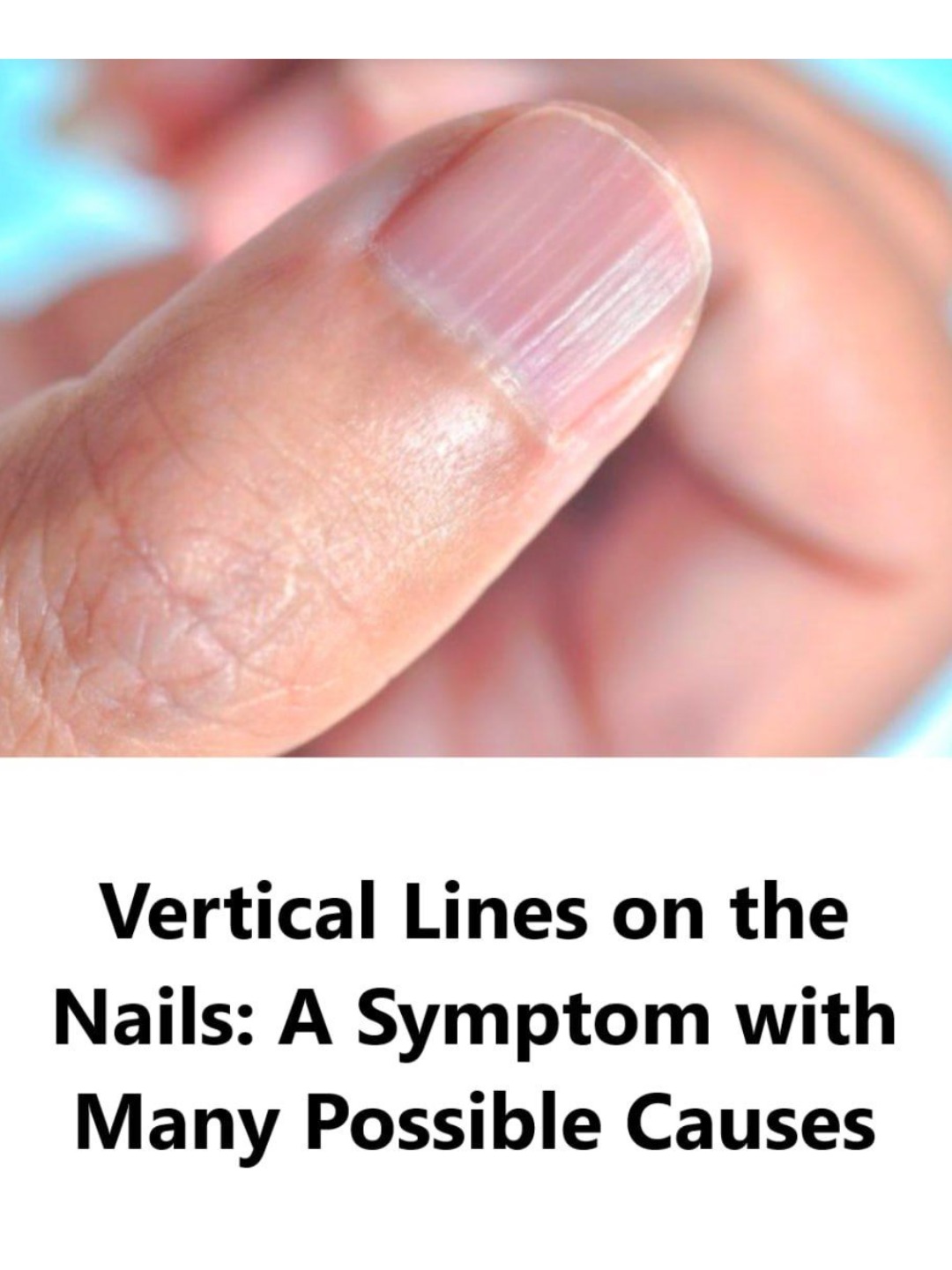
Vertical Lines on the Nails: What They Mean (And When to Worry)
This leads to:
Thinner nail plates
Slower growth
Development of vertical ridges
💡 Think of it like wrinkles—but for your nails.
If the lines appear gradually, symmetrically, and without pain or discoloration, this is likely just natural aging—and nothing to worry about.
⚠️ When Vertical Lines Might Signal Something More
While most cases are benign, some health conditions can contribute to or worsen nail ridges. Here’s what to watch for:
🩺 Possible Underlying Causes:
Nutritional Deficiencies
Lack of iron (anemia), B12, protein, or zinc → brittle nails with pronounced ridges
Psoriasis
Pitting, thickening, yellow-red patches under nail (
oil drop spots
), crumbling edges
Rheumatoid Arthritis
Ridges + joint pain, swelling, morning stiffness
Hypothyroidism
Dry, brittle nails, ridges, slow growth, pale color
Lichen Planus
Inflammatory condition that can damage nail matrix → ridges, thinning, even permanent nail loss
Onychophagia (Nail Biting)
Chronic trauma → distorted growth and ridging
Poor Circulation / Cardiovascular Risk
Some studies link severe nail changes to vascular health; more research needed
🚩 Red Flags: When to See a Doctor
Most vertical lines are harmless.
But consult a dermatologist if you notice any of these warning signs:
🔴 Sudden appearance of deep ridges
🔴 Discoloration: dark streaks (especially brown/black – could be melanonychia or melanoma)
🔴 Pain, swelling, or redness around the nail
🔴 Nail splitting, peeling, or crumbling
🔴 Pitting, dents, or white spots beyond simple ridges
🔴 Only one nail affected (could indicate localized injury or infection)
🧑⚕️ A dermatologist may use dermoscopy or take a sample to rule out psoriasis, fungal infection, or rare but serious conditions like subungual melanoma.
💡 How to Support Healthy Nails Naturally
Even if your ridges are age-related, you can improve nail strength and appearance with simple daily habits.
✅ Eat for Nail Health
Your nails grow from the matrix—a living tissue fed by your bloodstream.
Support it with:
Protein (keratin is made from protein!) → eggs, fish, beans, Greek yogurt
Iron & B12 → leafy greens, red meat, lentils (especially if prone to anemia)
Zinc → pumpkin seeds, oysters, chickpeas
Biotin → eggs, almonds, sweet potatoes (may help reduce brittleness)
Omega-3s → salmon, chia seeds, walnuts
💡 Note: Biotin supplements are popular for nails—but talk to your doctor first, as they can interfere with lab tests.
✅ Moisturize Daily
Dry nails = more visible ridges.
Use:
Hand cream with shea butter or ceramides
Cuticle oil (jojoba, vitamin E, or almond oil) nightly
Wear gloves when cleaning or doing dishes
✅ Avoid Over-Filing & Harsh Products
File gently in one direction (no sawing back and forth)
Limit gel manicures and acetone-based removers
Give your nails breaks from polish
✅ Improve Blood Flow
Healthy circulation = better nutrient delivery to nails.
Stay active (walk daily!)
Keep hands warm in cold weather
Massage fingertips regularly
❤️ Final Thought: Your Nails Are Messengers—Not Alarm Bells
Vertical lines on your nails aren’t a diagnosis.
They’re a clue.
And for most of us, the answer is simple:
👉 Time passes. Bodies change.
But if something feels “off”—if the ridges came suddenly, hurt, or look different than usual—it’s okay to ask, “What’s going on?”
Because small signs deserve kind attention—not fear.
And when you care for your body with curiosity instead of anxiety…
You give yourself the greatest gift:
Peace.
