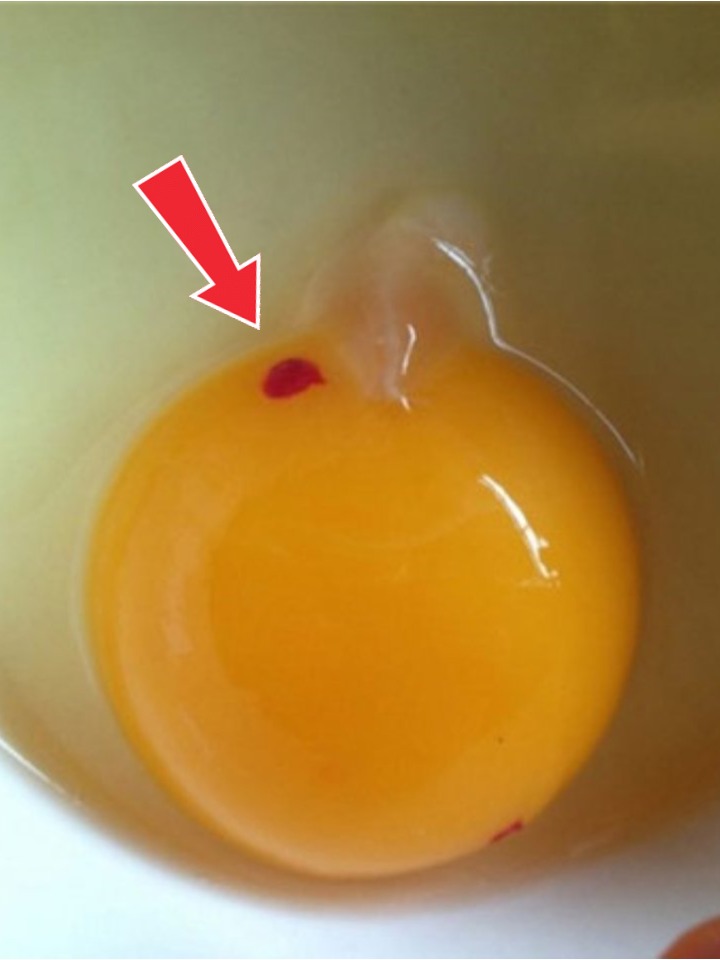
Should We Eat Eggs With BL00D Spots?
Additionally, egg whites may contain brown meat spots. These are little pieces of tissue picked up by the egg as it passes through the oviduct. They are also completely harmless. On the other hand, if an egg white is red, pink, or green in color, this egg should be discarded. It likely means that a potentially dangerous bacteria has grown in that egg and could make you sick.
How Many Eggs Have Blood Spots?
Fewer than 1% of eggs contain blood spots, and if you’re purchasing eggs from a grocery store, it’s unlikely you’ll come across one. This is because the grading process typically identifies and removes eggs with blood spots using a method called “candling,” where bright light is used to spot imperfections. As a result, eggs with blood spots rarely reach consumers. It’s important to note that this is not a health concern, but more about the fact that these eggs aren’t visually appealing to people.
However, with farm-fresh eggs, you’re more likely to encounter an occasional blood spot. These eggs don’t go through the same grading process, and farmers don’t have access to the same technology. Additionally, brown eggs are more prone to having spots because their darker shells make them harder to detect.
Why Do Some Eggs Have Blood Spots?
A common myth is that blood spots mean the egg was fertilized. This is false information. Instead, blood spots are the result of the rupturing of tiny blood vessels in the hen’s ovaries or oviduct. The oviduct is the passageway between the ovaries and the outside environment.
Blood spots can appear in both the yolk and the egg white. If the spot is in the yolk, it indicates that the bleeding occurred in the ovary when the egg was released from the follicle. If the spot is in the white, it means the bleeding happened after the egg was released into the oviduct.
