Red Dots on Your Skin? 11 Possible Causes — When to Worry and When Not To
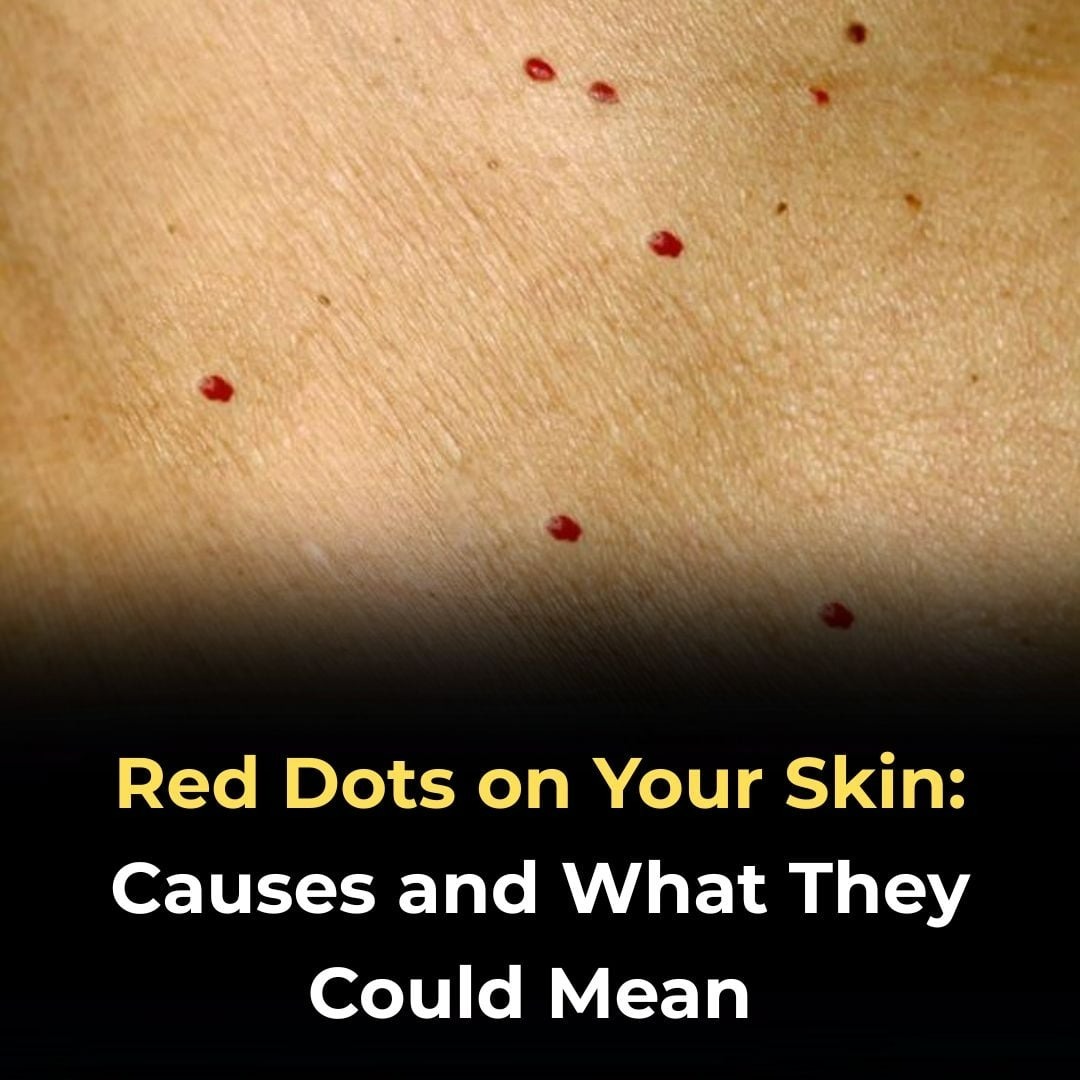
Common Features:
✅ Size
Pinpoint to a few millimeters
✅ Color
Bright red, dark red, or purple
✅ Texture
Flat or slightly raised
✅ Sensation
Usually painless and non-itchy
They can appear anywhere — arms, torso, legs, face — and become more common with age.
Let’s break down what they could mean.
🔬 11 Possible Causes of Red Dots on the Skin
1. Cherry Angiomas (Campbell de Morgan Spots)
What they are: Tiny, bright red bumps caused by clusters of blood vessels
Who gets them: Most adults over 30 — they increase with age
Where: Trunk, arms, shoulders
Are they dangerous? ❌ No — completely benign
Treatment: None needed — remove for cosmetic reasons only
✅ Think of them as “beauty marks” for your blood vessels.
2. Petechiae (Tiny Broken Capillaries)
What they are: Pinpoint red or purple spots from burst capillaries
Causes:
Straining (coughing, vomiting, childbirth)
Injury or pressure (tight clothing, vigorous massage)
Infections (strep, meningitis)
Low platelet count (thrombocytopenia)
Clue: Don’t fade when pressed (use a glass test)
When to worry: If they spread, don’t fade, or come with fever or fatigue
⚠️ Serious if paired with bruising, nosebleeds, or illness.
3. Spider Angiomas (Telangiectasias)
What they are: A central red dot with thin red lines radiating out — like a spider
Causes:
Sun damage
Hormonal changes (pregnancy, birth control)
Liver disease (cirrhosis)
When to check: If you have multiple spider veins + fatigue, jaundice, or swelling
✅ One or two? Likely harmless. Widespread? Worth a liver check.
4. Heat Rash (Miliaria)
What it is: Tiny red bumps from blocked sweat ducts
Where: Neck, chest, underarms — in hot, sweaty areas
Who: Babies, active adults, people in humid climates
Treatment: Cool down, wear breathable clothes
✅ Goes away on its own in a few days.
5. Allergic Reaction or Hives (Urticaria)
What it is: Red, raised, itchy bumps
Triggers: Foods, medications, insect bites, stress
Clue: They blanch (turn white) when pressed and move around
Duration: Come and go within hours or days
✅ Treat with antihistamines — see a doctor if breathing is affected.
6. Keratosis Pilaris (“Chicken Skin”)
What it is: Rough, red or flesh-colored bumps on arms, thighs, cheeks
Cause: Keratin buildup clogging hair follicles
Who: Common in teens and people with dry skin or eczema
Treatment: Moisturizers with lactic acid or urea
✅ Harmless — but can be improved with skincare.
7. Insect Bites (Mosquitoes, Fleas, Bed Bugs)
What they are: Red, itchy bumps — often in clusters or lines
Clue: Appear overnight, especially on exposed skin
Treatment: Anti-itch cream, antihistamines
✅ Rule out infestations if bites are recurring.
8. Fungal Infections (Ringworm, Tinea)
What it is: Red, circular, scaly patches — may have a raised edge
Misnomer: Not caused by worms
Treatment: Antifungal creams (clotrimazole, terbinafine)
✅ Spreads easily — treat early.
9. Autoimmune Conditions (Lupus, Vasculitis)
What it is: Red dots from inflamed blood vessels
Clue: Come with other symptoms — joint pain, fatigue, fever
Diagnosis: Blood tests (ANA, CRP, ESR)
⚠️ Rare but serious — needs medical evaluation.
10. Medication Side Effects
Drugs that can cause red dots:
Blood thinners (warfarin, aspirin) → petechiae
Antibiotics, NSAIDs → allergic rashes
Chemotherapy → capillary fragility
Action: Review meds with your doctor — don’t stop without advice
11. Serious Blood or Systemic Conditions (Rare)
Leukemia
Petechiae + fatigue, bruising, fever, weight loss
Vasculitis
Red dots + joint pain, nerve issues, organ involvement
Sepsis
Widespread petechiae + high fever, confusion, low blood pressure
✅ These are rare — but if red dots come with severe symptoms, seek emergency care.
[object NodeList]
🚨 When to See a Doctor
Most red dots are nothing to worry about — but don’t ignore these red flags:
✅ Red dots that
don’t fade when pressed
Could be petechiae from low platelets or infection
✅
Spreading rapidly
or getting darker
May signal infection or blood disorder
✅
Fever, fatigue, or unexplained bruising
Could indicate a systemic issue
✅
Bleeding gums or nosebleeds
Suggests clotting problem
✅
Liver disease signs
(jaundice, swelling, dark urine)
Possible link to spider angiomas
👉 If in doubt — get it checked. A simple blood test or dermatology visit can rule out serious causes.
🛡️ How to Care for Your Skin
✅
Don’t scratch or pick
Prevents infection and scarring
✅
Use gentle skincare
Avoid harsh soaps and alcohol-based products
✅
Protect from sun
Prevents spider veins and skin aging
✅
Stay hydrated
Supports skin and blood vessel health
✅
Monitor changes
Take photos to track new or growing spots
💬 Final Thoughts: Sometimes the Smallest Dot Is the Loudest Signal
We ignore red dots.
We blame aging.
We say, “It’s just a rash.”
But sometimes, the difference between “harmless” and “help needed”…
Isn’t in the color.
It’s in the pattern.
So if you notice new, spreading, or unusual red dots — especially with other symptoms…
Don’t panic.
But do act.
Because sometimes, the most important messages come in the smallest packages.
And once you start paying attention?
You might just catch something before it becomes serious.
