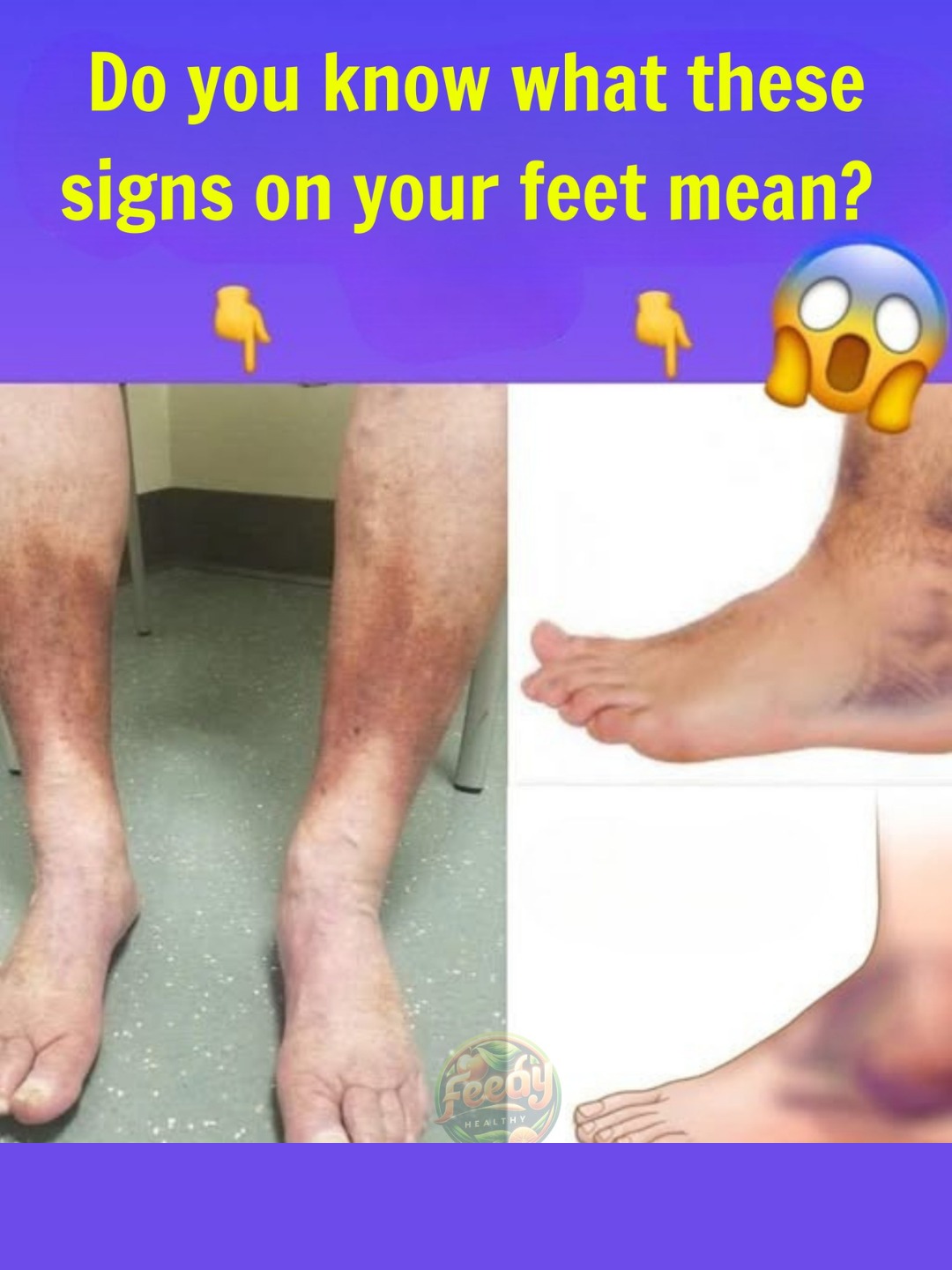
Do You Know What These Signs on Your Feet Mean?
🚩 9 Signs on Your Feet That Could Signal Poor Circulation
1. Cold Feet — Even in Warm Rooms
What it means: Reduced blood flow means less warmth reaches your extremities
Red flag: If only one foot is cold, it could indicate a blockage
✅ Normal? Cold feet in winter.
✅ Not normal? Feet stay cold under blankets or in heated rooms.
2. Numbness or Tingling (Like “Pins and Needles”)
Why it happens: Nerves aren’t getting enough oxygen due to poor blood flow
Common in: Toes and soles of the feet
⚠️ Don’t ignore it: Can be a sign of peripheral artery disease (PAD) or diabetic neuropathy.
3. Leg or Foot Cramps When Walking (Claudication)
What it feels like: Pain in the calf, thigh, or buttock that starts with walking and goes away with rest
Cause: Muscles aren’t getting enough oxygen during activity
✅ Classic sign of PAD — a buildup of plaque in leg arteries.
4. Skin Color Changes
Pale, bluish, or reddish skin on toes or feet
Why it happens: Lack of oxygen (pale/blue) or inflammation (red)
✅ Raynaud’s phenomenon: Fingers/toes turn white then blue in cold — linked to circulation issues.
5. Dry, Flaky, or Cracked Skin
Especially on heels and lower legs
Why it happens: Poor circulation reduces sweat and oil production, leading to dryness and slow healing
⚠️ Danger zone: Cracked skin can become infected — especially in people with diabetes.
6. Swelling in the Feet and Ankles (Edema)
What it means: Fluid builds up due to poor blood return to the heart
Worse after standing or sitting for long periods
✅ Can also signal heart, kidney, or liver issues.
7. Slow-Healing Sores or Ulcers
Cuts, blisters, or sores that take weeks to heal
Cause: Poor blood flow = less oxygen and nutrients for repair
🚨 High risk for infection and amputation in diabetics.
8. Visible Varicose or Spider Veins
Swollen, twisted, blue or purple veins
Cause: Damaged valves in veins allow blood to pool
✅ More than cosmetic: Can indicate chronic venous insufficiency.
9. Hair Loss on Feet or Legs
Thinning or no hair growth on lower legs and toes
Why it happens: Reduced circulation affects hair follicles
✅ A subtle but telling sign of poor blood flow.
🔍 What Causes Poor Circulation?
✅
Atherosclerosis
Plaque builds up in arteries, narrowing blood flow
✅
Diabetes
High blood sugar damages blood vessels and nerves
✅
Blood Clots (DVT)
Block veins, especially in legs — life-threatening if they travel to lungs
✅
Obesity
Extra weight puts pressure on veins, slowing circulation
✅
Sedentary Lifestyle
Lack of movement weakens circulation in legs
✅
Smoking
Damages blood vessels and reduces oxygen in blood
✅
Heart or Kidney Disease
Reduces the body’s ability to pump or filter blood
🛡️ How to Improve Circulation Naturally
1. Move More
Walk 30 minutes a day
Try calf raises, ankle circles, or leg lifts if you sit all day
✅ Muscle movement helps pump blood back to the heart.
2. Stay Hydrated
Drink plenty of water — dehydration thickens blood and slows flow
3. Elevate Your Legs
Lie down and prop feet above heart level for 15–20 minutes daily
Helps reduce swelling and improve return flow
4. Wear Compression Socks
Especially if you stand or sit for long periods
Improves blood flow and reduces swelling
✅ Ask your doctor first if you have heart or circulation issues.
5. Quit Smoking
One of the most effective things you can do for circulation
6. Eat a Heart-Healthy Diet
Focus on:
Leafy greens
Berries
Fatty fish (omega-3s)
Nuts and seeds
Avoid:
Processed foods
Excess salt and sugar
7. Manage Chronic Conditions
Keep blood sugar, blood pressure, and cholesterol under control
Follow your doctor’s plan for diabetes, heart disease, or kidney issues
💬 Final Thoughts: Your Feet Are Talking — Are You Listening?
We ignore cold feet.
We blame cramps on “getting older.”
We chalk dry skin up to winter.
But sometimes, the difference between “just my feet” and “a warning sign”…
Isn’t in the pain.
It’s in the pattern.
So if you’ve noticed:
Persistent coldness
Slow-healing cuts
Leg pain when walking
Don’t wait.
See a doctor.
Get checked.
Take action.
Because sometimes, the most important thing your body is telling you…
Isn’t with words.
It’s with your toes.
And once you start paying attention?
You might just protect your heart, your legs, and your future — one step at a time.
