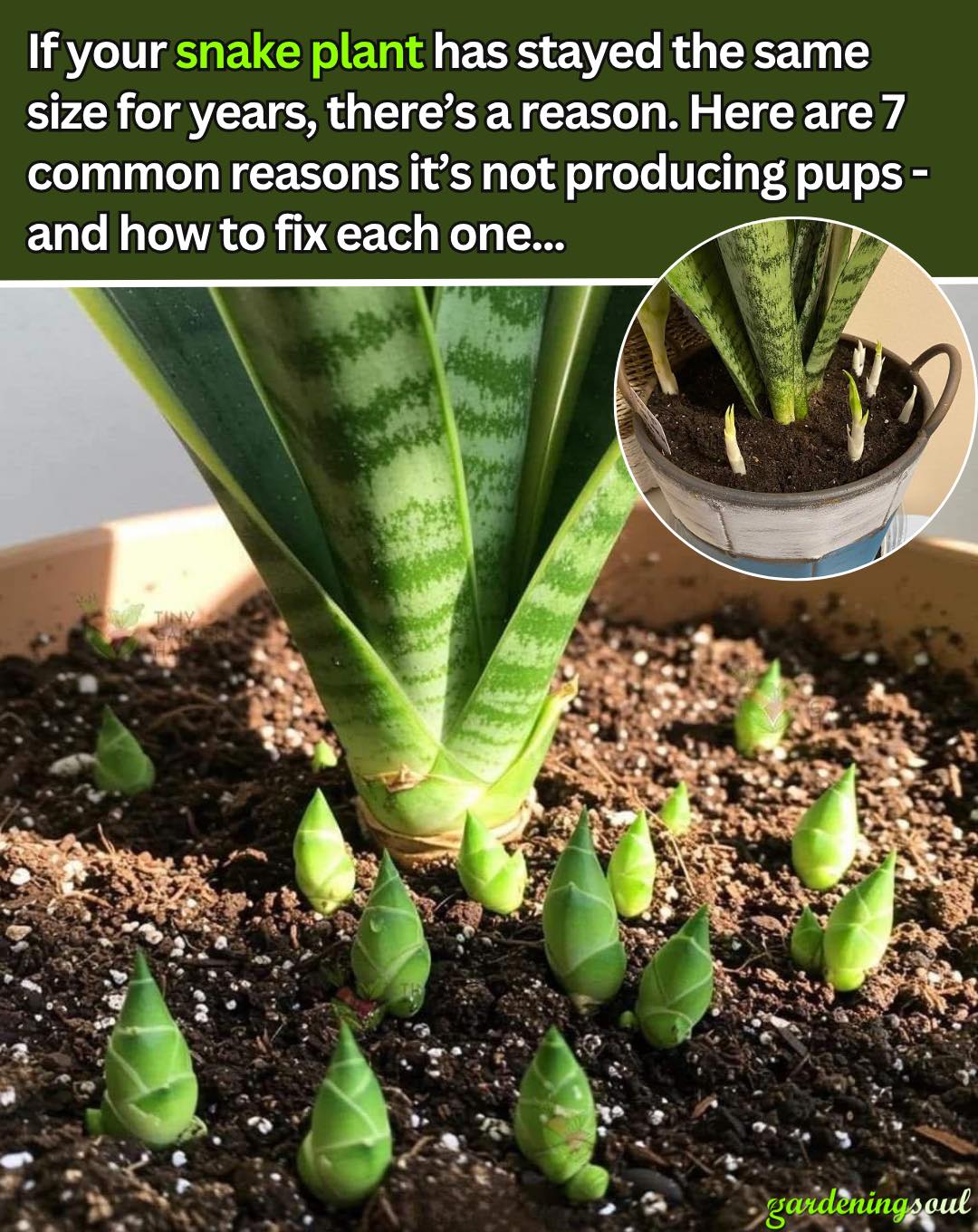
Why Depth Affects Pups
Snake plants produce pups from their rhizomes, and if those rhizomes are buried too deeply under dense or compacted soil, they may not have enough energy to push new shoots to the surface.
Additionally, if rhizomes are damaged during repotting, pup production can stall for months.
How I Fix It
- When repotting, position the root ball so the rhizomes sit just below the soil surface (about 1 inch deep).
- Loosen compacted soil gently to give pups an easier path upward.
- Avoid cutting or damaging rhizomes during division – always use a sharp, clean knife and handle them carefully.
Bonus Tips: How I Encourage Snake Plants to Produce More Pups
Once you’ve addressed the main issues, there are a few pro-tips I use to boost pup production even more:
1. Controlled Stress
Allowing the plant to become slightly root-bound can trigger a survival response – pushing out pups to spread. But don’t let it go too far; severe crowding can slow growth.
2. Warmth and Humidity
Snake plants love warmth. Temperatures around 70–85°F (21–29°C) encourage faster rhizome growth. Moderate humidity (40–50%) is ideal.
3. Pruning Older Leaves
Removing a few of the oldest, tallest leaves can redirect energy into rhizome development and pup production.
4. Propagation as a Reset
If a mature snake plant hasn’t produced pups for years, dividing it and repotting sections separately can “reset” its growth pattern – often resulting in new pups within a season.
Common Myths About Snake Plant Pups
There’s a lot of misinformation about why snake plants don’t produce pups.
Here are a few myths I’ve seen – and the truth:
- “If it’s not producing pups, it’s a bad plant.” – False. Most plants will eventually produce pups if conditions are right.
- “You need to fertilize heavily for pups.” – False. Overfertilizing can actually damage roots. Light feeding is enough.
- “Snake plants won’t pup indoors.” – False. With proper care, they’ll multiply even on a windowsill.
If your snake plant hasn’t produced pups, don’t give up – it’s not a lost cause. These plants are resilient, and with the right care, almost all of them will eventually multiply.
