Have you ever eaten a big meal and wondered, “Where does all that food go—and how long does it actually stay in my stomach?” Maybe some meals leave you feeling full for hours, while others have you hungry again in no time.
It’s not your imagination—different foods digest at different speeds. And that affects everything from your energy levels to your mood, weight, and even your sleep quality.
Understanding how digestion really works can change the way you eat. You’ll know which foods to pair for smooth digestion, how to avoid bloating, and how to make your meals work with your body, not against it.
Let’s take a closer look at this fascinating process.
🌿 The Journey of Digestion: More Than Just Your Stomach
Digestion begins the moment you take your first bite.
Enzymes in your saliva start breaking down carbohydrates even before you swallow. Then, your food travels down the esophagus into your stomach, where acids and enzymes take over.
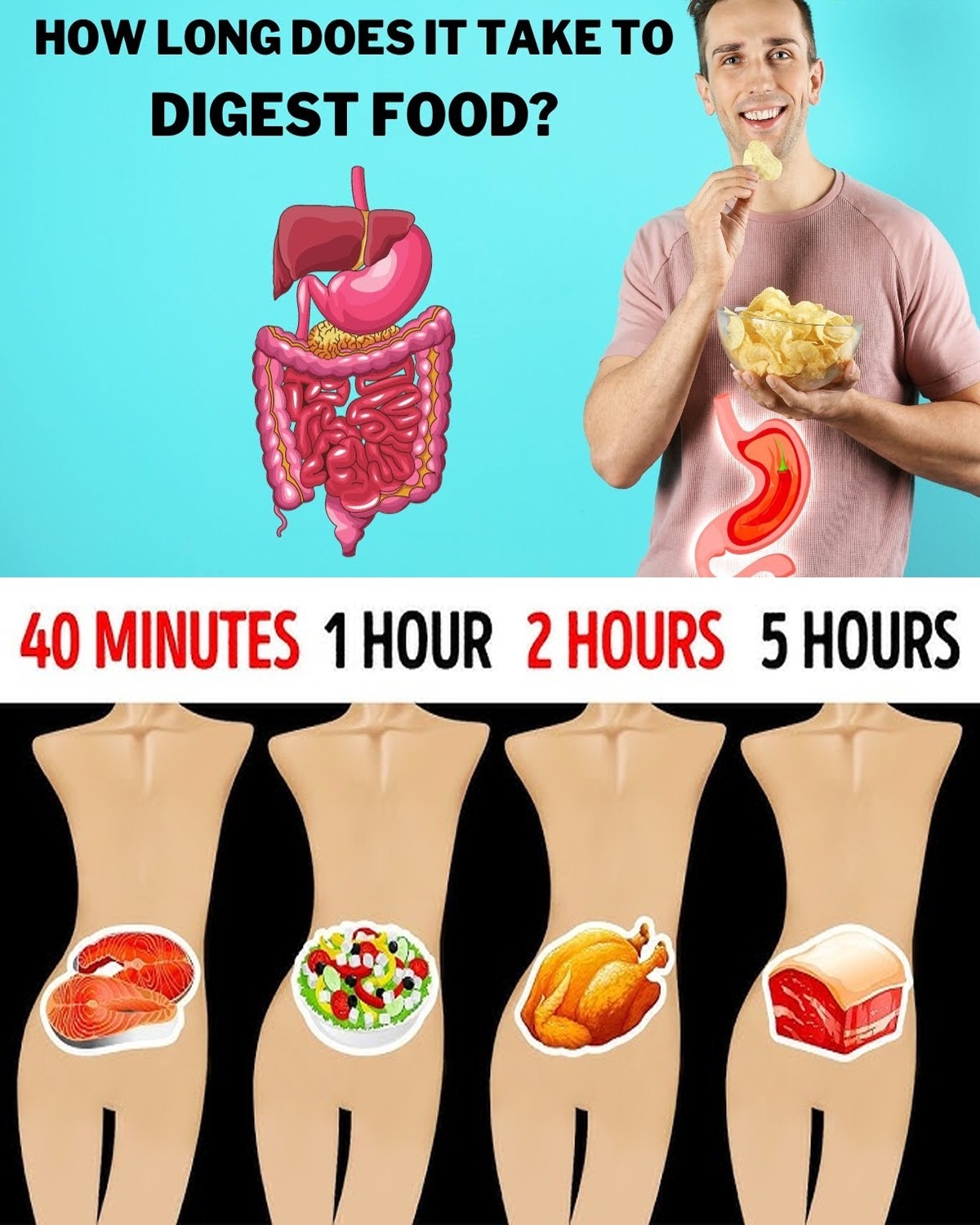
Depending on the type of food, this stomach stage can last anywhere from 30 minutes to 6 hours.
Afterward, food moves to your small intestine (where nutrients are absorbed) — a process that can take another 6–8 hours. Finally, it reaches the large intestine, where water is absorbed and waste is processed for elimination.
🕐 Total digestion time: anywhere between 24 to 72 hours, depending on what—and how—you eat.
🍎 Why Some Foods Digest Faster Than Others
The speed of digestion depends on a few key factors:
Water content: High-water foods (like fruits and veggies) move through faster.
Fiber: Slows digestion but keeps you full longer.
Protein & fat: Take more effort for your body to break down.
Meal combinations: Certain pairings can help or hinder digestion speed.
